Hey friends! If you’ve been hanging around here for a while, you probably know I’m a huge fan of frugal living.
I was born and raised in the Philippines by two incredibly hardworking parents. Growing up, we didn’t have much—and living frugally wasn’t a choice, it was just how we survived. But you know what? I wouldn’t trade that experience for anything.
Those early years taught me some powerful lessons about money, creativity, and finding joy in the little things. I still carry those values with me today, and that’s exactly why I love sharing practical, real-life tips on how to live well while spending less.
I can still picture those moments from my childhood: washing clothes by hand, raising chickens in our backyard, cooking everything from scratch, and even living on an island without electricity for a while. It wasn’t always easy—but those memories are full of heart and grit. And they shaped how I see the world.
Of course, I understand that those ways of living might seem outdated—especially in the U.S. Don’t worry, I’m not suggesting you move off-grid or start raising poultry in your backyard (unless you want to!).
What I am sharing today are money-saving ideas—yes, some might call them extreme frugality tips—that, while a bit more challenging, are still practical and relevant today.
So if you’re ready to embrace a more frugal lifestyle—whether to seriously save money or simply to enjoy the challenge—this post is for you. Because believe it or not, frugal living can be fun… especially for those of us who live and breathe it!
Short-Term and Long Term Extreme Frugality Tips
Table of Contents
To make things more practical, I’ve divided the tips into two categories: short-term and long-term frugal living strategies.
- Short-term tips are perfect if you're looking to cut expenses quickly—within the next few weeks or months. These are great if you’re in a financial pinch, saving for a specific goal, or just want to challenge yourself to live more simply for a while.
- Long-term tips are ideal if you're planning for big-picture goals like early retirement or long-term financial freedom. These strategies require consistency, commitment, and a true mindset shift—but the rewards can be life-changing.
Note: I'm not saying all short-term frugal tips are easy (though some definitely are!), but I believe each one is realistic and doable with a little effort.
If early retirement or financial independence is your endgame, pay close attention to the long-term frugal living tips. These are the habits and lifestyle shifts that make a lasting difference over time.
Short-Term Extreme Living Tips
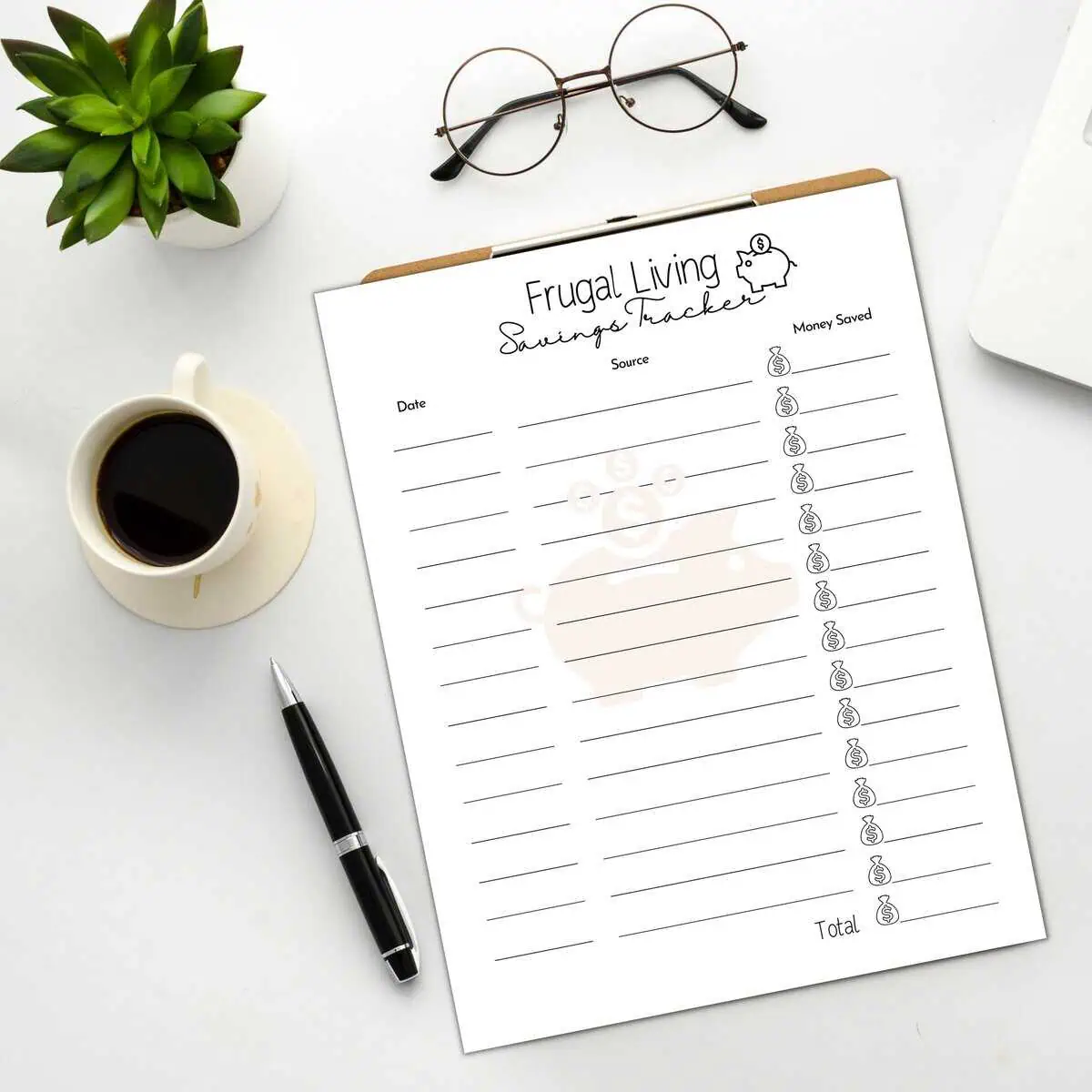
Want to add a little fun and motivation to your frugal journey? Use this free Extreme Frugality Tracker to keep a running total of how much money you’re saving with the tips I share in this post.
It’s a great way to stay inspired and see your efforts pay off—literally!
Download the free tracker by dropping your email address in the signup form below.
1. Don’t Spend Money on Anything (If You Can Help It)
Here’s a bold yet simple tip: if you don’t need it, don’t buy it.
Many people upgrade to the latest phone, laptop, or kitchen gadget just because it’s new—not because their old one stopped working. But if your current items are still functional, keep using them!
Every unnecessary purchase avoided is money saved and clutter reduced.
2. Give Free or DIY Gifts
As someone who loves minimalism, I’m not a fan of receiving or giving frivolous gifts. When I do give more expensive gifts, it’s always something truly needed and appreciated.
Instead, consider giving something homemade:
- A batch of cookies
- A handmade candle
- A bouquet from your garden
These gifts are heartfelt, low-cost, and surprisingly memorable. Do this all year round and watch your gift-giving budget shrink!
3. Make More Things Yourself
Many extremely frugal people embrace DIY living. Try making your own:
- Bread
- Granola bars
- Soups and sauces
- Yogurt - here's how I make it.
I actually made a lot more things from scratch in the past year and really enjoyed it. You can view all my homemade projects over here ( think of yogurt, breads, sodas, candles, lotion bars and more!).
It might seem like extra work at first, but it quickly becomes second nature—and your grocery bill will thank you.
4. Skip the $5 Lattes
That $5 daily latte habit? It adds up. Brewing your own coffee at home is cheaper and still delicious.
- Save $5/day = $150/month = $1,800/year!
Still want Starbucks? Earn free gift cards with these survey sites:
- Swagbucks – Earn points for tasks and get a $5 welcome bonus
- MyPoints – Watch videos or shop online, and earn a $10 Amazon card
- InboxDollars – Similar to Swagbucks, with a $5 bonus for joining
5. Flush Less Often
“If it’s yellow, let it mellow…”
This old-school trick may not be for everyone, but it saves a surprising amount of water. Imagine how much water—and money—you’d save by cutting a few flushes each day.
Collectively, this could save hundreds of millions of gallons (and dollars) each year!
6. Do Laundry Less Often
Laundry is a big energy and water consumer. If you currently do laundry daily, try switching to every other day—especially if you have kids.
Washing full loads less frequently can make a noticeable dent in your electric and water bills.
✅ Related: Simple Ways to Lower Your Electric Bill
7. Try a No-Spend Challenge
One of my favorite frugal experiments: the No-Spend Challenge.
Commit to not spending money (beyond essentials) for a week or month. Track how much you save and reflect on your spending habits.
📌 Start here: How to Do a No-Spend Challenge & Win It
8. Live in a Van
Yes, this is next-level frugal—but some people absolutely love it.
“Van lifers” often save thousands by avoiding rent, mortgage, property taxes, and utility bills. They also gain freedom and flexibility to travel and work on the road.
It’s not for everyone, but it’s a powerful example of living intentionally.
9. Move Back in with Your Parents
If housing costs are crushing your budget, living with family temporarily can be a smart move.
You’ll save on rent, utilities, and even food in many cases—giving you a chance to build savings or a home down payment much faster.
10. Quit Soda
Soda is bad for your health and your wallet. Cutting it out (or reducing it) will save you money at every grocery trip and potentially lower medical expenses down the road.
Your body and budget will thank you!
11. Stop Going Out (Unless You Have To)
Here’s a hard truth: social outings can get expensive. Dinner, drinks, movies, gas—it adds up fast.
If you spend just $30 per week on outings, that’s $1,560 per year. Cutting back doesn’t mean cutting off your friends—host a potluck or free game night instead!
12. Walk or Use Public Transportation
If you live in a city or town with reliable public transport, use it!
You’ll save hundreds (or thousands) each year on:
- Gas
- Insurance
- Car maintenance
- Parking
Plus, walking more = free exercise!
13. Consider Homeschooling
Did you know the average parent spent $498 per child just for back-to-school shopping in 2021—and some went into debt for it?
Add in school lunches, field trips, sports, and transportation, and the cost of even public schooling can be hefty.
Homeschooling can significantly reduce these expenses, especially if you have multiple kids close in age. It’s not the right fit for every family, but it’s worth considering if education costs are a concern.
14. 1-in-1-out Rule
Follow the 1-in-1-out rule which simply means: for every new item you bring into your home, you get rid of one.
This simple habit keeps clutter at bay, curbs unnecessary spending, and makes you more mindful of your purchases. If you're working toward a more frugal or minimalist lifestyle, this is a great place to start.
15. Always Make a List Before Going Shopping
Impulse purchases are sneaky budget-busters. Stores are designed to tempt you—placing expensive items at eye level, using flashy endcap displays, or advertising "limited-time offers" that you don’t really need.
Combat this by always shopping with a list and sticking to it no matter what.
Start today, and by the end of the month, you’ll be surprised at how much you’ve saved just by avoiding unplanned purchases.
16. Don't Keep Up with the Joneses
You don’t need to match your friends’ spending habits—especially if they’re living beyond their means. Buying the latest gadgets, taking luxury vacations, or wearing designer clothes doesn't necessarily mean they’re wealthier. They might just be deeper in debt. Stay focused on your own goals.
And if comparing yourself to others on social media fuels spending temptations, it might be time for a digital detox. Unfollow, mute, or take a break. Protect your peace and your wallet.
16. Use Coupons Whenever Possible
Couponing might sound old-fashioned, but it works!
You don’t need to clip newspaper inserts anymore—there are tons of modern, easy ways to save:
- Check store websites or mobile apps for digital coupons.
- Visit sites like Groupon, RetailMeNot, or Honey to find deals and cashback offers.
- Call your favorite local stores and ask if they offer discount codes or coupon books.
- Contact manufacturers directly—they often send coupon books or even free samples!
Even saving a few dollars per trip can add up quickly over the year.
18. Don't Buy New Clothes
Here’s a fun challenge: Don’t buy new clothes until you’ve saved $1,000 in your emergency fund. Once you hit that milestone, raise the bar to $2,000, $3,000, and so on.
Not only will you save money, but you'll also learn to appreciate what you already have. Bonus points if you take this opportunity to declutter your wardrobe and rediscover forgotten favorites!
If you're up for a saving money challenge, try my saving challenges below. Download my free printables!




19. Embrace Minimalism
Frugal living and minimalism go hand in hand. When you let go of the idea that you need more to be happy, you free yourself from the cycle of consumerism.
Minimalism isn’t about deprivation—it’s about intentional living. Fewer possessions mean less stress, more space, and greater clarity about what truly matters.
The less you consume, the more you save—and the richer your life becomes in more meaningful ways.
20. Skip Eating Out (Seriously, It Adds Up!)
Let’s talk about one of the biggest budget killers: eating out.
I get it—grabbing takeout or dining out is super convenient, especially when you’re busy or just don’t feel like cooking. But have you ever really looked at the numbers?
In North America, eating out can cost you way more than making meals at home. Even something as simple as a $10 sandwich ends up costing you closer to $12.50 after taxes and tips.
Now imagine doing that three times a day. That’s around $45 a day, or roughly $1,350 a month. Do it every week for a year, and you’ve spent over $7,000 just on food from restaurants!
Crazy, right?
Cooking at home might take a little more effort, but it saves a ton of money—and you’ll probably eat healthier too. Start by cutting back one meal at a time and see how much you can stash away!
21. Save for Vacations But Don't Spend It (Yet!)
I know, I know. After a long year of hard work, the idea of jetting off to a luxurious vacation sounds like the reward you deserve.
But here’s my take: just because you saved for a vacation doesn’t mean you have to spend it right now—especially if your goal is extreme frugal living.
I’m not saying “never travel again,” but maybe reconsider whether you really need that expensive trip right now. What if you kept that money in savings or invested it instead?
It could grow into something even better in the future—like a stress-free retirement, a down payment on a house, or peace of mind during emergencies.
✨ Curious about investing? Here are beginner-friendly ways to invest grow your money!
22. Avoid Online Shopping Unless It's Truly Necessary
Online shopping can be dangerous—trust me, I’ve been there.
One minute you’re browsing for socks, and the next you’ve got $200 worth of “stuff” in your cart that you definitelydidn’t need.
That’s why I’ve made it a rule: no online shopping unless it’s something I truly need—like a replacement for a broken item or something I’ve planned for in my budget.
Keep those impulse buys in check, and you’ll keep your bank account happier too.
23. Save for the Rainy Days Each Year
Even if you already have an emergency fund, don’t stop there. I make it a goal to add to mine every single year.
Why? Because life is unpredictable. And when the unexpected happens—job loss, medical bills, home repairs—you’ll be so glad you gave yourself that cushion.
If saving extra seems impossible right now, consider picking up a side hustle. With so many flexible, work-from-home options these days, it's easier than ever to start earning a little extra on the side.
👉 Need ideas? Check out these posts for inspiration:
- 26 Stay at Home Jobs with High Income Potential
- 18 New Ways For Females to Make Money Online (I Love #7!)
- How to Sell on Amazon for Beginners with Retail Arbitrage
24. Make Your Own Laundry Detergent
It's easy to make (and easy on your wallet) and you can find tutorials all over the internet to help you out with it. You'll be surprised at how much you'll save in a year by doing this. It's well worth the effort to make your own soap, and it helps the environment too!
Related: The Best Homemade Laundry Detergent to Save Money
25. Cut the Cable
Who still has cable nowadays? But if you still do, maybe it's time to cut it.
Cable TV is expensive. You’re probably paying anywhere from $40 to $100 a month—and for what? A few channels you actually watch and a bunch of stuff you don’t?
By cutting cable, you could save $480 to $1,200 per year. That’s real money back in your pocket! And with so many affordable (or free) streaming options out there, you won’t miss much.
Plus, you’ll likely gain some free time to read, start a hobby, or work on your goals—which is always a good thing.
26. Pay in Cash
Here’s a tip that might feel old-school but really works: use cash.
Swiping a card makes spending feel almost invisible. But when you physically hand over cash, you feel it. That awareness helps you stay on budget and make smarter spending choices.
One way to do this is with the envelope system:
- Budget out your expenses at the start of the month
- Allocate cash into labeled envelopes (groceries, gas, fun, etc.)
- Only spend what’s in the envelope
It might take a little getting used to, but it’s incredibly effective if you want to stay in control of your money and build stronger spending habits.
27. Cancel Services or Memberships
Let’s be honest—how many subscriptions are you actually using?
If you’re paying for a gym you haven’t been to in months or a streaming service you never watch, it’s time to cancel. Even small monthly charges can add up fast.
Instead of the gym, try working out at home using free YouTube videos or going for walks or runs outside. You’ll save money and time.
Go through your bank statements and look for anything on auto-pay that you don’t truly need. Canceling even one or two can make a noticeable difference in your monthly budget.
28. Ask for Free Stuff
This might sound a little unconventional, but sometimes all you have to do is ask—especially from friends or family. You’d be surprised how often people are willing to give away things they no longer need. Whether it’s furniture, clothes, or kitchen appliances, you might score some great finds just by putting the word out.
And if you're looking to get free money, don’t miss out on these free money hacks that actually work!
29.Use Money Apps like Ibotta
Here’s one of my favorite extreme frugal living tips: use the Ibotta app, which has helped me save over $1,000 on groceries!
I stumbled upon Ibotta a few years ago and decided to give it a try—and I’m so glad I did. The app allows you to earn cash back on everyday purchases, from grocery staples like milk, eggs, and bread to household items like detergent and soap.
Here’s how it works:
- Browse offers in the app before shopping.
- Purchase the qualifying items.
- Scan your receipt or link your store account.
- Get real cash back—redeemable via PayPal or gift cards!
The offers change weekly, so be sure to check the app before you make your shopping list. Since I started, I’ve earned over $1,000—that’s money I would’ve otherwise spent without any return!
30. Compare Cell Phone Plans
Cell phone bills can eat up a chunk of your budget, but there’s a simple fix—shop around. With so many providers out there, competition is fierce, and many offer better deals just to win you over.
A helpful strategy? Call your current provider and mention you’re considering switching. You’ll often be offered a discount or a better plan to convince you to stay. Loyalty doesn’t always pay—but a little negotiating often does!
31. Avoid Using Your Credit Card
While credit cards can be convenient, they can also be a fast track to debt—especially when used for non-essentials. If you can avoid it, don’t rely on credit to cover your expenses.
Living frugally means making sacrifices now to enjoy peace of mind later. Look for ways to reduce expenses instead of borrowing—like washing clothes in cold water. Not only does it save energy and money, but it’s also gentler on your clothes. If cold water is good enough for your body, it’s certainly good enough for your laundry!
32. Keep a Frugal Calendar to Keep Track of Your Spending
Want a fun and motivating way to stay frugal? Try using a frugal calendar. It’s simply a monthly calendar where you schedule and commit to specific money-saving actions each day or week.
From no-spend days to DIY projects and budget check-ins, this tool keeps you accountable and inspired. Best of all, you can download a free frugal calendar here and start embracing the extreme frugal lifestyle right away. Stick to it, and you’ll be amazed at how much you can save in just a month!
33. Share Rides Whenever Possible
Carpooling is a smart and simple way to cut down on commuting costs. Most people drive solo to work, even though sharing a ride is often an option. If you live near someone who works at the same company—or close by—consider offering them a ride in exchange for splitting the cost of gas.
Not only does this arrangement save both of you money, but it also reduces traffic congestion, cuts down on emissions, and minimizes wear and tear on your vehicle. It’s a win-win for your wallet and the environment.
Bonus: You might even make a new friend or strengthen a work relationship in the process!
34. Cut Your Own Hair
Why not give DIY haircuts a try? I do it myself—and trust me, it’s not as hard as it sounds. Since moving here, I can count on one hand the number of times I’ve been to a salon—and I usually regret spending $30–$40 each time (including blow-dry and tip!).
That might not seem like a lot to some, but to an extremely frugal person like me, it adds up quickly—especially when I compare it to the haircuts I used to get in the Philippines for just $2! Of course, prices vary by country, but the shock still gets me every time.
The good news? There are plenty of YouTube tutorials that walk you through cutting your own hair, whether you're trimming bangs or doing a full-on cut. With just a few tries, you could be saving $30 every 2–3 months, or around $120+ per year!
35. Use Technology to Save Money
Thanks to technology, it’s never been easier to save money effortlessly. From comparison shopping to finding online coupons, these tools do the hard work for you:
- Rakuten – Earn up to 40% cash back when shopping online at popular retailers. Just click through their site before you make a purchase.
- Honey – This browser extension automatically finds and applies coupon codes at checkout and even helps compare prices across sellers.
36. Do Your Own Home Maintenance
Hiring professionals for home chores can be expensive—but many tasks can be done yourself, especially if you have a bit of patience and a willingness to learn.
If a new faucet costs $50 at Home Depot and takes you less than an hour to install, why pay a handyman $100+ for the same job?
Here are a few DIY roles you can take on at home to save hundreds each year:
- Your own gardener – Learn to trim hedges, mow lawns, and grow your own herbs.
- Your own computer technician – Handle basic troubleshooting, updates, and maintenance.
- Your own cleaner – Set a cleaning schedule and make your own natural cleaning products.
- Your own painter – A few supplies and some time can save you hundreds on professional fees.
- Your own tax preparer – Use reputable tax software to file returns and track expenses.
- Your own chef – Cook at home more often using meal plans, bulk cooking, and leftovers.
With some DIY spirit, you’ll not only save money but gain valuable life skills.
37. Meal Planning
Did you know the US discards more than 40 million tons of food per year, more than any other country? Imagine how much money is just being wasted!
If you really want to save money, then this is probably one of the best extreme frugality tips you should start with: avoid food waste. Again, we go back to shopping with a list and maybe revisiting your food budget.
38. Don't Buy a Brand New Car or Any Car at All
Yeah, just don't buy a brand new car or not buy a car at all. This might be a difficult one for some, but you could get a used car that's just as good and not have to spend nearly as much.
39. Cook In Bulk
This is probably one of the best extreme frugality ideas that anyone can do: cook in bulk and freeze for future meals. You can also cook a large amount of meat at one time, shred it and then freeze it for use later in tacos, soups, or casseroles. This saves you time and money because it takes less time to cook later!
40. Make Your Own Cleaning Products
If you are used to the convenience of buying and using cleaning products, you'll probably find this tip on the more extreme side. But extremely frugal people use distilled white vinegar, baking soda, and lemon juice to clean just about anything. It's safer, cheaper and so easy to prepare. Plus, you are also helping save the environment by decreasing your consumption of plastic bottles.
Here are a few great recipes to try to make your own cleaning products:
- All-purpose cleaner - Mix one part water with one part vinegar in a spray bottle. Then add 15-20 drops of essential oil to create a fresh scent.
- Glass cleaner - Mix 1 cup water with ½ cup vinegar in a spray bottle. Add 10-15 drops of essential oil for added scent.
- Tub and tile scrubber - A paste made from baking soda and hydrogen peroxide works great to scrub tubs and tile.
- Dusting spray - Mix 3 tablespoons cornstarch with 2 cups water in a spray bottle. Add 20 drops of your favorite essential oil for scent. Shake well before each use
41. Create a Clothing Exchange with Friends
Do you have clothes in your closet that just don't fit anymore? Do you have friends who may be the same size as you? Why not create a clothing exchange with your friends and save yourself some cash?
42. Save the Planet Without Sacrificing Convenience
This extreme frugality tip is one I like to call "simple sustainability." We all know we need to save the planet and do our part for future generations (at least, we should), but this doesn't mean you have to give up all of your favorite conveniences in the process.
Take LED lamps, for example. You can get a 4-pack on Amazon for just $15 and they pay for themselves very quickly, since they last so much longer than regular lightbulbs. You simply screw them into whatever lamp you already have, and then start saving money right away.
Also consider replacing your old, broken appliances with energy-efficient appliances to save money on energy costs.
These types of things may not seem like much in the grand scheme of things, but every little bit counts when you're trying to save money.
43. Eat Less Meat
Meat is one of the most expensive foods you can buy so reduce the amount of meat in your diet. If you give up meat for one day a week, then that's 52 days a year where you're saving money!
If you can, follow the vegan diet!
44. Start a Garden
It's much cheaper over the long run (and healthier!) if you can grow some of your own food rather than buying all of it at the store each week.
Some great examples are planting tomatoes, spring onions, hot peppers, and basil bushes in containers around your windowsill.
It costs almost nothing to grow a small garden and it can help you save a few bucks each week!
Long-Term Extreme Frugality Ideas
45. Put aside a Certain Amount Every Month
One of the most effective ways to build financial security is to consistently set aside money each month, no matter how small the amount may be. Even if you start with just $20 per month, you’re creating a habit that can grow over time and support your long-term goals.
To make saving more engaging, consider trying money-saving challenges. These challenges add structure and motivation to the process. I personally use them for nearly every financial goal—whether it’s for vacations, emergency funds, retirement, or general savings.
A few ideas to try:
- The 52-week challenge (save a little more each week)
- The no-spend month
- The $5 bill challenge (save every $5 bill you get)
These small habits add up—and they build the discipline that leads to financial peace.
46. Live Overseas
Living overseas, most especially in countries where the cost of living is relatively low, can be a great option as well for extremely frugal people who love adventures.
My husband and I have also been thinking about moving to the Philippines since he's already retired (yay!) and I work from home. We figured we would only spend $1000-$1500 per month to live WELL in the Philippines with a child at school.
This, however, requires a lot of preparation and research, so do your own due diligence before jumping into this option!
Update (2025): We actually were able to do it! We were able to move to the Philippines to retire in 2023!
47. Set Frugal Savings Goals
Set a frugal savings goal, such as saving $1,000 in an emergency fund for something that could happen unexpectedly.
48. Set a Budget
No matter where you are at in your frugal living journey, you should always keep a budget. Your budget is your spending plan. If you follow it, you should be able to avoid spending unnecessarily and have more control of your money.
Related: How to Create a Realistic Budget that Works
49. Know the Difference Between Needs and Wants
I put this in the long-term frugal living tips because this could otherwise easily throw you off track of your personal finance goals. It's a habit you should develop if you want to learn how to live super frugally.
Know the difference between what you need and what you just want. For example, a new car might be a "want", not a "need". So think about that before going out and spending money on something that will just be another item on your list of things to worry about.
50. Automate Your Savings
Set up a household budget and automate your savings so you never have to think about them -- treat it like one less bill to pay!
51. Save for Retirement
Save for retirement even if it's just 1% of your income, or 10% if you can manage it.
There you have it--51 extreme frugality tips for you to follow in 2022! Hope you enjoyed reading this post as much as I did writing it!