
What would you do when things suddenly take a turn and you have to rely on what’s already in your pantry? It’s a simple question, but one that makes you stop and think.
If you’ve ever wondered about this, you’re not alone. As moms, we’re always trying to stay one step ahead—planning meals, stretching groceries, and making sure there’s always something on the table. But when the unexpected happens, even the most prepared days can feel a little uncertain.
I remember a week when the stores nearby ran low on basic items, and I had to make do with what I already had at home. It wasn’t the easiest—but it reminded me how comforting it is to know you have enough. That quiet kind of reassurance matters more than we realize.
In this post, we’ll walk through practical, budget-friendly survival foods to keep in your pantry—so you can feel a little more prepared, a little less stressed, and ready to take care of your family no matter what comes your way.
But First, What Makes a Good Survival Food?
Table of Contents
Before buying emergency food supplies, it’s important to understand what qualities matter most. Ideal survival foods should have:
- Long shelf life
- High nutritional value
- Easy preparation
- Minimal cooking requirements
- Affordable cost
- Compact storage
- Versatility in meals
Foods that require refrigeration or spoil quickly are not ideal for long-term emergency preparedness.
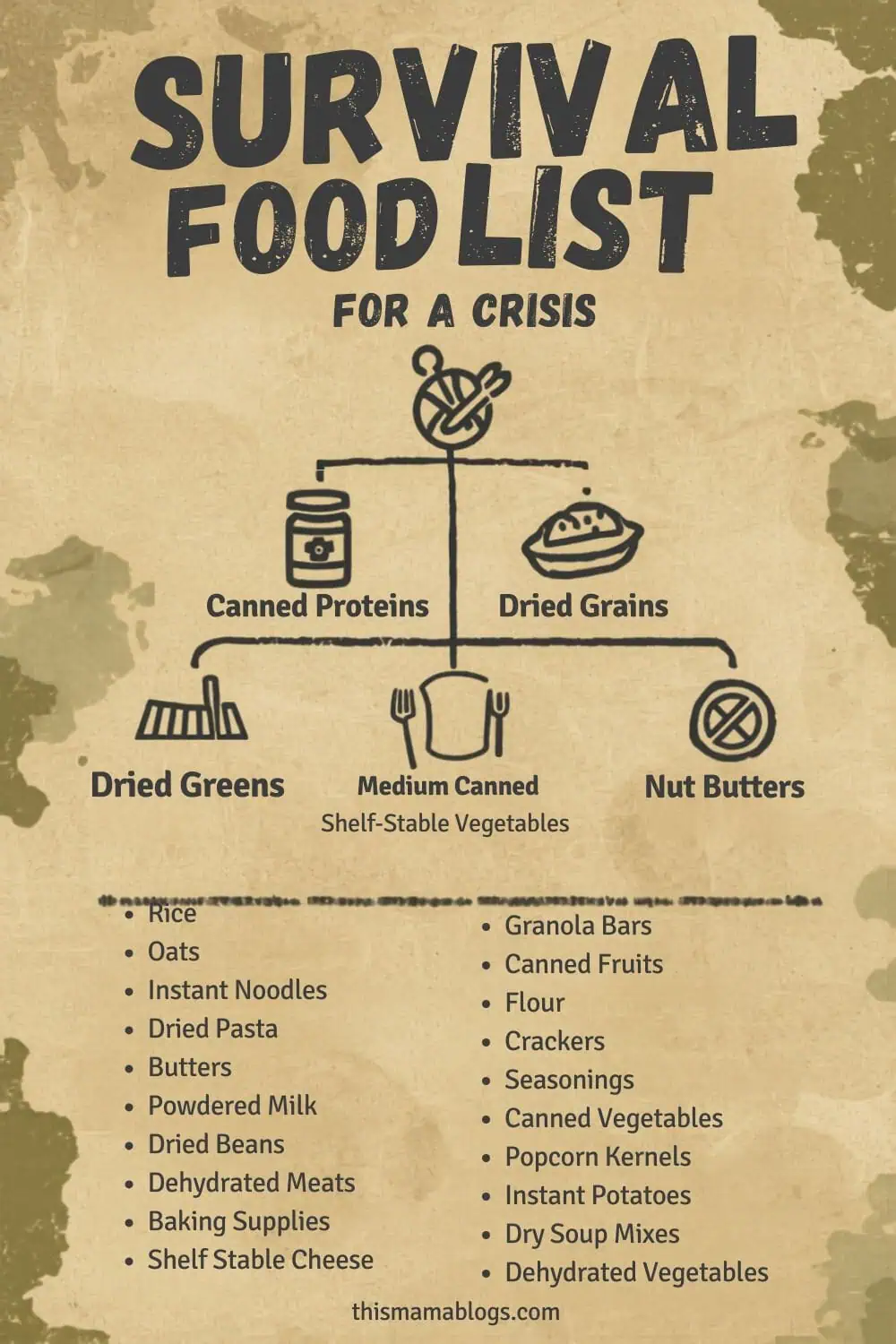
Best Survival Foods to Stockpile
1. Rice
Shelf Life: 2-30 years
Rice is one of those pantry staples that fits right into any list of survival foods to buy in times of crisis. It’s filling, affordable, and stretches easily—helpful when you need to make meals last a little longer. It pairs well with almost anything, from canned goods to vegetables, or even just a pinch of salt, and it still feels complete. At home, it’s a staple we always keep on hand, serving as a base that makes even a plain meal feel enough.
What really makes rice so reliable is how easy it is to cook. It doesn’t call for fancy ingredients—just water and heat. Stored properly, it keeps for a long time without losing quality. It’s a practical survival staple that keeps things simple in the kitchen and brings quiet comfort to the table, even on the toughest days.
Best Types:
- White rice (longest shelf life)
- Jasmine rice
- Basmati rice
- Instant rice for emergencies
2. Oats
Shelf Life: 2-30 years
Oats are practical because they’re simple to prepare even on low-energy days. They also store well and take up very little space, making them easy to keep around. It’s a staple that helps you slow down and find more ease, even when life seems a little off.
Best Options:
- Rolled oats
- Quick oats
- Instant oatmeal packets
Benefits:
- High in fiber
- Affordable
- Great breakfast option
Oats can also be used in baking and homemade energy bars or homemade granola.
3. Instant Noodles
Shelf Life: 1–2 years
Instant noodles are often the quickest comfort you can reach for. They are easy to prepare, needing only hot water, and come in different flavors that can gently lift your mood even on long days.
In times of crisis, their long shelf life and easy storage make them a practical staple to keep stocked. You can enjoy them as they are, or turn them into something more filling by tossing in eggs, vegetables, or whatever’s left in the fridge. That simple flexibility is what makes instant noodles easy to lean on when things get tight.
4. Dried Pasta
Shelf Life: 3-5 years ( or 2 years beyond its "best by" date)
Dried pasta is one of those reliable pantry staples I like to keep around when times feel a bit uncertain. It lasts a long time, is inexpensive, and doesn't require refrigeration. When cooked, it becomes a filling base for many simple meals, especially when there isn't much in the pantry.
It is highly flexible and easy to work with. You can pair it with canned sauce, a light drizzle of oil and salt, or any vegetables or protein you have. Even small additions can turn it into a complete meal while helping stretch ingredients further with little effort. A simple garlic and oil pasta is a classic option—it comes together quickly, uses basic pantry ingredients, and brings a warm, comforting feel on tougher days.
Pasta is another inexpensive carbohydrate source that stores well.
Recommended Types:
- Spaghetti
- Macaroni
- Egg noodles
- Instant noodles
Pair pasta with canned sauce, canned meat, or powdered cheese for easy meals.
5. Peanut Butter
Shelf Life: 1–2 years unopened
If you’re looking to prep your pantry for a rainy day, peanut butter is a total lifesaver— one of those “just-in-case” foods worth keeping on hand. We’ve started tucking a few jars away, and it’s reassuring to know we have a delicious, high-energy snack ready whenever we’re in a pinch. It’s creamy, satisfying, and packed with protein to keep us fueled and going through the day.
The beauty of this staple is its long shelf life without the need for refrigeration. Since you don’t have to cook it or add water, it is easy to enjoy straight from the jar or spread over crackers, bread, oats, and other emergency foods. It’s a practical way to stay prepared while making sure your survival kit is as reliable as it is comforting.
6. Powdered Milk
Shelf Life: 2-10 years, or more beyond its "best by" date if stored properly in a cool, dry place
When handpicking essentials for a well-prepared pantry, powdered milk is one staple you shouldn’t miss out on—it stores well, needs no refrigeration, and is ready whenever fresh milk isn’t available. Just mix it with safe water, and it turns into a simple source of calcium and protein—easy to pour into coffee, stir into oats, or enjoy as a quick, soothing drink.
It also slips easily into everyday cooking. A spoonful can gently enrich soups, soften baked goods, or add a mild creamy note to drinks without overpowering their flavor. It’s a humble pantry essential that softly brightens small moments, offering warmth and ease in a cup or meal.
Uses:
- Drinking
- Baking
- Mixing with cereal or oats
It’s especially important for families with children.
8. Dried Beans
Shelf Life: 2–10 years when stored in airtight containers
If you want to keep your survival pantry both hearty and wholesome, dried beans are an absolute must-have—they are a budget-friendly staple for long-term prep.
Beans are packed with protein, fiber, and nutrients, making them one of the best survival foods for long-term emergencies.
Good Options:
- Pinto beans
- Black beans
- Kidney beans
- Lentils
- Chickpeas
Beans are affordable, versatile, and can be used in soups, stews, rice dishes, and casseroles. Lentils are especially useful because they cook faster than larger beans, saving fuel and cooking time during emergencies.
9. Dehydrated Meats
Shelf life: 1-2 months
Dehydrated meats are a compact way to keep protein stored long-term without needing refrigeration. Once rehydrated or added directly to soups and rice dishes, they bring a rich savory flavor and make simple meals more flavorful. They work especially well in broths, fried rice, or quick stews where a small amount goes a long way.
Because most of the moisture is removed, they last much longer than fresh meat when kept sealed and dry. They are also lightweight and easy to portion, making them practical for storage, travel, or when fresh protein isn’t readily available.
10. Granola Bars
Shelf Life: 1 year, or a few months beyond its "best by" date
Granola bars are a reliable, no-fuss snack that’s always ready when you need something quick to grab and go. Made from oats, nuts, and a hint of sweetness, they come together in a compact, chewy bar that feels both filling and easy to enjoy. Each one is neatly wrapped to help keep it fresh, so you can store a few in your pantry and enjoy them anytime.
When life gets a bit too busy for a sit-down meal, these bars offer a little nourishment that fits right in your hand. I sometimes reach for one when I’m feeling worn-down and overwhelmed—it’s a small, simple comfort that helps me find my footing, no matter what the day brings.
You can also make your own granola bars. Here's how to make it with just a few simple ingredients.
11. Canned Fruits
Shelf Life: 1-1.5 year
Canned fruits are a great addition to your pantry because they bring a bit of hydration and vitamins that you don’t always get from dry staples. When things feel a little heavy or bland, their bright, refreshing flavor can gently lift the mood. Whether they’re packed in juice or syrup, they offer a simple sweetness that’s easy to enjoy any time of day.
The best is that they are ready to serve just as they are. Since they come with their own liquid, they stay juicy and full of flavor. Keeping a few cans of peaches and pears on your shelves is a lovely way to keep your home prepared and your kitchen stocked—a small, sweet comfort for your family to share when the day calls for something light and refreshing.
Instead of buying canned fruits, you can also buy fresh fruits and can them yourself at home. Home canning is a great way to preserve food for long-term storage while saving money and reducing waste. I learned how to can using this book, and it made the process much easier for beginners.
11. Flour
Shelf Life: 1-2 years
Flour is an important survival pantry staple because it can be used to make bread, tortillas, pancakes, biscuits, and other filling foods during a crisis.
Best Types:
- All-purpose flour
- Bread flour ( I no longer buy bread flour. I make my own bread flour using all-purpose flour.)
- Whole wheat flour
Storage Tips:
Store flour in airtight containers in a cool, dry place. For longer shelf life, many people freeze flour for a few days before storage to help prevent pests.
Flour becomes even more valuable when paired with yeast, baking powder, salt, and cooking oil for homemade baking during emergencies.
12. Crackers and Shelf-Stable Snacks
Easy snacks provide quick calories and comfort during stressful situations.
Good Options:
- Crackers
- Trail mix
- Pretzels
- Dried fruit
Rotate snacks regularly to maintain freshness.
13. Salt and Seasonings
Food fatigue can become a real problem during long emergencies. Basic seasonings make survival meals more enjoyable.
Essentials:
- Salt
- Pepper
- Garlic powder - I make this from scratch!
- Bouillon cubes
- Sugar
Salt is also useful for food preservation.
14. Honey
Honey is one of the few foods that can last indefinitely when stored correctly.
Benefits:
- Natural sweetener
- Antibacterial properties
- High energy source
Honey may crystallize over time but remains safe to eat.
15. Canned Vegetables
During a crisis, fresh produce may not be available. Canned vegetables help provide essential vitamins and minerals.
Good Choices:
- Corn
- Green beans
- Peas
- Carrots
- Mixed vegetables
Low-sodium varieties are often healthier for long-term use.
16. Popcorn Kernels
Shelf Life: 2 years when stored in airtight containers
Popcorn is one of the most underrated foods for emergency preparedness. Not only is it inexpensive and easy to store, but it also has an impressively long shelf life when kept dry and protected from moisture. Popcorn kernels provide carbohydrates for energy and can be a comforting snack during stressful situations.
Why Popcorn Is Great for Emergency Storage:
- Long shelf life
- Affordable bulk food
- Lightweight and compact
- Easy snack during stressful situations
Popcorn kernels can be cooked on a stovetop, over a fire, or in an air popper if electricity is available. Besides making popcorn, the kernels can also be ground into cornmeal for baking and cooking.
17. Instant Potatoes
Shelf Life: With proper storage (cool, dry, sealed), they can last years, and up to 15–25 years if packed in Mylar bags with oxygen absorbers. Once opened, they should be used within 6–12 months
Instant potatoes are a convenient emergency food because they require very little preparation and can be made quickly with hot water. They are lightweight, compact, and easy to store in bulk.
Benefits:
- Quick comfort food
- Lightweight storage
- Long shelf life
- Easy side dish
Mashed potatoes can provide warmth and comfort during emergencies, especially when fresh food options are limited. They also pair well with canned meats, gravy mixes, dehydrated vegetables, or soup bases to create filling meals.
18. Dry Soup Mixes
Shelf Life: 1–10 years depending on ingredients
Dry soup mixes are excellent survival foods because they often combine beans, grains, pasta, and seasonings into one easy meal. Many soup mixes are inexpensive and can feed several people with minimal effort.
Good Options:
- Split pea soup
- Lentil soup mix
- Bean soup mix
- Chicken noodle soup packets
Soup mixes are ideal during cold weather or emergencies because they provide warmth, hydration, and nutrition all at once. You can also stretch them further by adding rice, pasta, canned vegetables, or extra beans.
19. Shelf-Stable Cheese
Shelf Life: 6 months–10 years depending on type
Shelf-stable cheese products can add flavor, calories, and variety to survival meals. During long emergencies, comfort foods and flavorful ingredients can help reduce food fatigue.
Examples:
- Powdered cheese
- Cheese spreads
- Wax-coated hard cheeses
Cheese products work well in pasta dishes, soups, rice meals, and casseroles. Powdered cheese, in particular, stores well for years and can turn basic survival foods into more satisfying meals.
20. Jerky
Shelf Life: 1–2 years unopened
Jerky is a lightweight, portable protein source that stores well and requires no cooking. It’s ideal for emergency kits, bug-out bags, or quick meals during power outages.
Best Options:
- Beef jerky
- Turkey jerky
- Homemade dehydrated meat
Jerky is especially useful because it provides protein without refrigeration. Homemade jerky can also be made using dehydrators or smokers, allowing you to preserve meat for longer storage.
21. Baking Supplies
Basic baking ingredients become extremely valuable during emergencies because they allow you to make bread, biscuits, pancakes, and other filling foods from simple pantry staples.
Yeast
Shelf Life: 1–2 years unopened
Yeast is essential for making homemade bread and dough. Vacuum-sealed or refrigerated yeast can last even longer.
Baking Powder
Shelf Life: 6 months–1 year
Baking powder helps baked goods rise and is useful for biscuits, pancakes, and quick breads.
Baking Soda
Shelf Life: Indefinite if kept dry
Baking soda has multiple uses beyond baking, including cleaning and deodorizing.
Sugar
Shelf Life: Indefinite when stored properly
Sugar adds flavor, preserves foods, and provides quick energy during emergencies.
Together, these baking essentials make it possible to prepare homemade foods even when grocery stores are unavailable.
22. Bouillon Cubes and Broth Powder
Shelf Life: 1–2 years
Bouillon cubes and broth powders may seem small, but they can dramatically improve the taste of emergency meals. During long-term crises, flavorful foods can help improve morale and make repetitive meals easier to eat.
Uses:
- Soup base
- Rice seasoning
- Flavoring beans and pasta
These products are inexpensive, compact, and easy to store. A small amount can transform plain rice or beans into a much more satisfying meal.
23. Electrolyte Drink Mixes
Shelf Life: 2–5 years
Electrolyte drink mixes are useful for staying hydrated during emergencies, especially in hot weather, illness, or physically demanding situations.
Recommended Options:
- Electrolyte powders
- Sports drink mixes
- Oral rehydration packets
These mixes can help replace minerals lost through sweating or dehydration. They are lightweight, compact, and easy to add to stored water supplies.
24. Dehydrated Vegetables
Shelf Life: 10 years if vacuum-sealed
Dehydrated vegetables are excellent long-term storage foods because they are lightweight, nutritious, and take up far less space than canned goods.
Popular Choices:
- Onions
- Carrots
- Bell peppers
- Potatoes
- Celery
These vegetables can easily be added to soups, rice dishes, casseroles, and pasta meals to improve flavor and nutrition. Because they last for decades when stored correctly, dehydrated vegetables are popular among long-term preppers.
Instead of buying dehydrated vegetables, you can also dehydrate vegetables at home using a food dehydrator. Buying fresh vegetables in bulk and dehydrating them yourself is often much cheaper than purchasing pre-packaged dehydrated foods.
Home dehydrating also allows you to control the ingredients and preserve your favorite vegetables for long-term storage. Popular vegetables to dehydrate include onions, carrots, celery, potatoes, peppers, and tomatoes. Once fully dried, store them in airtight containers or Mylar bags with oxygen absorbers to help extend shelf life.
25. Canned Meat
Shelf Life: 2–5 years or longer depending on the product
Protein is extremely important during stressful situations, and canned meats provide a convenient source that requires no refrigeration until opened.
Recommended Choices:
- Tuna
- Chicken
- Salmon
- Spam
- Corned beef
- Sardines
Canned meats are ready to eat straight from the can, making them valuable during power outages or situations where cooking is limited. Keep a manual can opener in your emergency supplies.
Looking for Money Saving Tips?
Feel free to browse around for more inspiration!



Tips for Building a Survival Food Stockpile
Start Small
You don’t need to buy everything at once. Add a few extra items during regular grocery trips.
Rotate Your Food
Use the “first in, first out” method:
- Eat older items first
- Replace them with fresh supplies
Store Food Properly
Keep food:
- Cool
- Dry
- Dark
- Airtight when possible
Proper storage dramatically extends shelf life.
Don’t Forget Special Needs
Consider:
- Baby formula
- Pet food
- Medical diets
- Vitamins
- Allergy-friendly foods
Sample 2-Week Survival Food List for One Person
Here’s a simple example:
- 10 lbs white rice
- 5 lbs beans
- 10 cans meat
- 10 cans vegetables
- 10 cans fruit
- 2 jars peanut butter
- 2 lbs oats
- 4 boxes pasta
- Powdered milk
- Crackers
- Cooking oil
- Honey
- Salt and spices
- 14 gallons water
This basic supply can provide enough calories and nutrition during short-term emergencies.
Final Thoughts
Preparing a survival food supply doesn’t have to be complicated or expensive. By focusing on shelf-stable essentials like rice, beans, canned goods, oats, and emergency water, you can build a reliable food reserve for unexpected crises.
The key is to start early, buy smart, and gradually build your stockpile over time. Even a small emergency food supply can help protect your family during uncertain situations.
Having food security means having peace of mind — and that’s valuable in any crisis.