
Did saving feel tougher than you ever hoped recently? If so, you’re not alone—and that’s exactly why a fresh reset can feel so helpful.
Saving money doesn’t need to be restrictive or require cutting out everything you enjoy. It can begin with small, meaningful steps that gently replace unhelpful habits with better ones, making saving feel more like a shift in routine than a sacrifice. No matter what your savings have looked like up to this point, this season creates space to refocus, rebuild confidence, and move forward with intention.
To make saving feel more realistic and motivating, I’m sharing this Poor Habits Money-Saving Challenge—a simple, month-long approach designed to flow naturally with everyday life rather than work against it. This challenge offers a clear reset for your finances, encouraging you to turn everyday choices into small, practical ways to save.
There’s no pressure to be perfect—just an invitation to stay consistent, learn as you go, and appreciate each step forward. With patience and consistency, this money-saving challenge can help set a calm, confident tone for how you approach saving, keeping it aligned with the life you’re creating.
Why the Poor Habits Savings Challenge Works
Table of Contents

The challenge is more than just a way to stash money— it’s a month-focused savings approach that helps you save money by connecting your financial goals directly to a personal resolution.
Instead of asking you to save a random amount, this challenge ties your savings to meaningful goals— getting rid of debt, investing in a new hobby, committing to a healthier lifestyle, or turning overspending into smarter spending—so savings feels purposeful, practical, and easier to stick with.
Research shows that people who set clear, specific goals are more likely to succeed than those without defined goals, because specific goals help focus attention and make it easier to follow through.
What makes this challenge actually work is how it builds momentum over time:
- Small wins add up – Completing your monthly resolution gives you a sense of progress that keeps you motivated.
- Habit loops are reinforced – Repeating simple, intentional actions helps make saving a routine.
- Progress builds over time – Consistent small efforts gradually turn into noticeable savings and healthier money habits.
- Awareness sharpens choices – Reviewing your spending throughout the month helps you cut down on impulse spending and unnecessary purchases. When you track your habits, you start to notice patterns and triggers, which makes it easier to make smarter financial decisions moving forward.
This challenge turns your New Year’s resolution into small, actionable steps, so during the month you’re not just saving money—you’re actively working towards goals that matter to you.
How to Do this Money-Saving Challenge
This challenge is simple to follow and designed to fit seamlessly into your everyday routines. If you’re ready for a fresh start with your savings, here’s how to do it step by step.
1. Set a Practical Resolution
Choose a resolution based on common spending habits or recurring expenses—such as dining out, subscriptions, back-to-school prep, or holiday-related spending. For example, you might focus on cutting back on takeout or reducing impulse purchases to free up extra savings.
2. Set a Savings Goal
Decide on an amount you want to save based on your resolution. Aim for a goal that feels motivating but still realistic enough to maintain. The key is choosing something you can consistently stick with.
For example, data shows that many Americans spend between $11 and $30 per person per meal when dining out, with nearly half spending $11–$20 and about a quarter spending $21–$30. If you cut back by cooking at home for just one or two additional meals per week, you could free up roughly $50–$120 to put toward your savings goal.
3. Put Your Resolution into Action
Each time you skip an expense tied to your resolution—such as passing on an $18 takeout meal—immediately set that amount aside in savings. Continue doing this until you reach (or exceed) your planned goal. This step turns intentional spending choices into real, tangible progress.
4. Track Your Progress
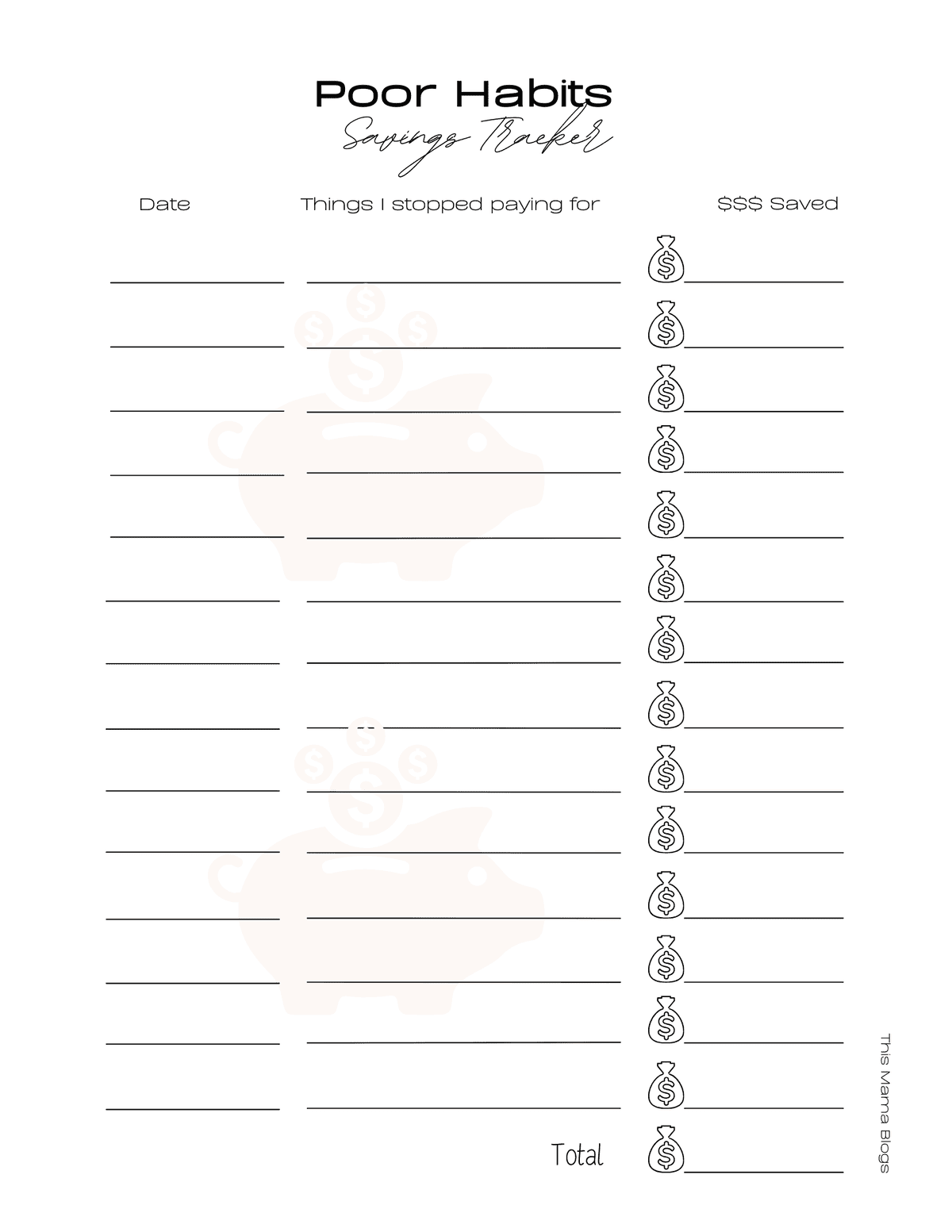
Use a notebook, spreadsheet, or printable chart to record each saving action. Tracking helps you stay motivated and clearly see how small choices add up over time. To make it easier, I’ve created a printable tracker you can download and use alongside the challenge.
5. Reflect and Adjust
Once you’ve completed the challenge, review what worked well and what felt difficult. Use those insights to adjust your next resolution or savings approach moving forward.
Following these steps helps you build stronger money habits, spend more intentionally, and watch your savings grow throughout the challenge period.
Below is a tracker with sample amounts to show how the challenge works. If you’d like to keep the momentum going, you can repeat the process—set a new resolution, define your savings goal, record each saving action, and track your running total until you reach it.
Poor Habits Saving Challenge Example
Below is a sample of how to complete this savings challenge. To stay motivated, print the savings tracker below (no sign-up required) or choose to receive it by mail. To make sure you don’t lose your copy, simply sign up using the form below and have it sent straight to you.
Resolution: Cut back on dining out
Monthly Goal: $100
| Date | Amount Saved | Running Total | Notes/Reflection |
| 01/03 | $15 | $15 | Skipped dinner out |
| 01/07 | $20 | $35 | Cooked at home instead of takeout |
| 01/12 | $18 | $53 | Skipped coffee shop visit |
| 01/19 | $25 | $78 | Brought lunch from home |
| 01/30 | $22 | $100 | Goal Reached! |
Total $100
Tips for Staying Consistent
Making savings part of a meaningful personal goal can give the process more purpose, but it’s easy for plans to slip when life gets busy.
As a mom, I’ve had weeks where juggling bills, kids, and errands pushes savings goals to the back burner. That’s why having clear, practical tips for sticking with the challenge can make all the difference.
1. Align Your Savings with a Real-life Resolution
Plan your savings around a goal that genuinely fits your lifestyle—such as cutting back on takeout or being more intentional with everyday purchases. If a goal feels unrealistic or doesn’t align with your habits, it’s easier to lose momentum. Keeping it manageable helps you stay consistent. With a clear, doable focus, saving feels intentional, and progress becomes easier to see as you go.
2. Plan Ahead to Avoid Surprise Costs
Even when major spending periods have passed, everyday expenses can still be higher than expected. Data shows that consumer prices tend to rise at certain points throughout the year as businesses adjust pricing, increasing the cost of groceries and other essentials.
By planning for common price increases—such as food, utilities, or other recurring bills—you can approach saving with more intention instead of being caught off guard by unexpected expenses.
3. Track Both Habits and Numbers
Don’t just record how much you saved—note what triggered extra spending or helped you save. Over time, these insights reveal patterns in your habits that you can adjust. It turns saving into a learning process, not just a mechanical task.
4. Make Small Tweaks
Take a little time to review and reflect on what worked, what felt unrealistic, and what needs adjusting in your savings plan. For example, if your resolution is cutting back on dining out, make sure you’ve actually saved the exact amount you’ve committed for that goal. Doing a quick “financial deep clean”—reviewing your spending and confirming you hit your savings target—helps prevent overspending creeping back in.
Regular check-ins make it easier to adjust your plan while keeping your savings progress intentional and visible.
5. Celebrate Progress
Acknowledge your wins—not with big purchases, but with small gestures or moments that feel rewarding to you. Research suggests that rewarding small successes can strengthen the habit you’re building, because the positive feedback you get reinforces the behavior and helps it become automatic over time.
Looking for More Money Saving Challenges?
Looking for more money-saving challenges? Feel free to browse around and download my free printables to track your progress!


Final Thoughts
This savings challenge is a chance to work toward meaningful financial goals while building positive, sustainable money habits.
By focusing on small, intentional changes, you can begin to see steady progress take shape—helping you develop a healthier relationship with money and creating a bit more breathing room in your budget.
It might feel small, but when you’re managing family expenses as a mom, every bit truly counts. For example, I noticed that choosing to cook healthier meals at home didn’t just support our family’s health—it also reduced grocery and takeout costs and made me more mindful of how we spend together. With consistent effort over time, those small wins add up, quietly shaping the way you manage your finances and paving the way toward greater financial freedom.