
Have you ever walked into the store for just a few essentials and somehow walked out with a cart full of things you never planned to buy?
I’ve definitely been there. You head in for milk, eggs, and bread—then a cozy home décor piece catches your eye, your favorite coffee blend goes on sale, and before you know it, your cart is overflowing. By the time you reach the checkout, your grocery bill is much higher than expected. The most frustrating part? Realizing you still need to make another trip because you forgot the one ingredient you actually needed for dinner.
That’s what pushed me to start using a monthly grocery list—and it completely changed the way I shop.
As a mom, having a plan helps me stay organized and makes preparing budget-friendly meals for my family feel far less stressful. Writing everything down helps me avoid impulse buys, keep my budget under control, and save time during the week since I’m not constantly running back to the store or stressing over what’s missing.
To make life a little easier for busy moms like us, I’ve put together a simple monthly grocery list—practical, flexible, and thoughtfully organized to guide your shopping and meal planning. With a little prep, mealtime becomes more effortless, comforting, and worry-free, saving both time and money.
Making Things From Scratch
Table of Contents
Our monthly grocery list has changed a lot over the years. As I’ve started making more foods from scratch, many items have been removed from what used to be a much longer list.
For example, instead of buying pancake mix, I now stock all-purpose flour and keep a homemade pancake mix ready in my pantry. That same flour is also used to make cake and cornbread mixes, breads, pizza dough, and more—one ingredient replacing several store-bought items!.
This simple shift has helped me streamline our grocery list, save money, and rely less on packaged foods. If you’re curious about what else I no longer buy, check out 100 Foods I Stopped Buying and Started Making Instead.
Keep in mind that your monthly grocery list will look different from mine—and that’s perfectly okay. Every family eats differently, has different preferences, and follows different dietary needs or budgets. This list isn’t meant to be a one-size-fits-all plan, but rather an example of the types of items you might include when planning your own monthly shopping. Use it as a starting point, then customize it to fit your household, your meals, and what works best for you.
What to Include in Your Monthly Grocery List
If you’re planning a big grocery run for the month, it pays to focus on pantry- and freezer-friendly staples. These items save time, money, and the stress of last-minute trips.
Whether you’re preparing for busy weeks ahead or simply want to shop smarter, these categories are perfect to include in your monthly grocery list:
- Dried foods
- Canned foods
- Jarred foods and cartons
- Frozen foods
- Snacks
- Meats
- Fresh Produce
Stocking up on these long-lasting essentials makes month-long meal planning much easier, so you can spend less time worrying about groceries and more time enjoying your meals.
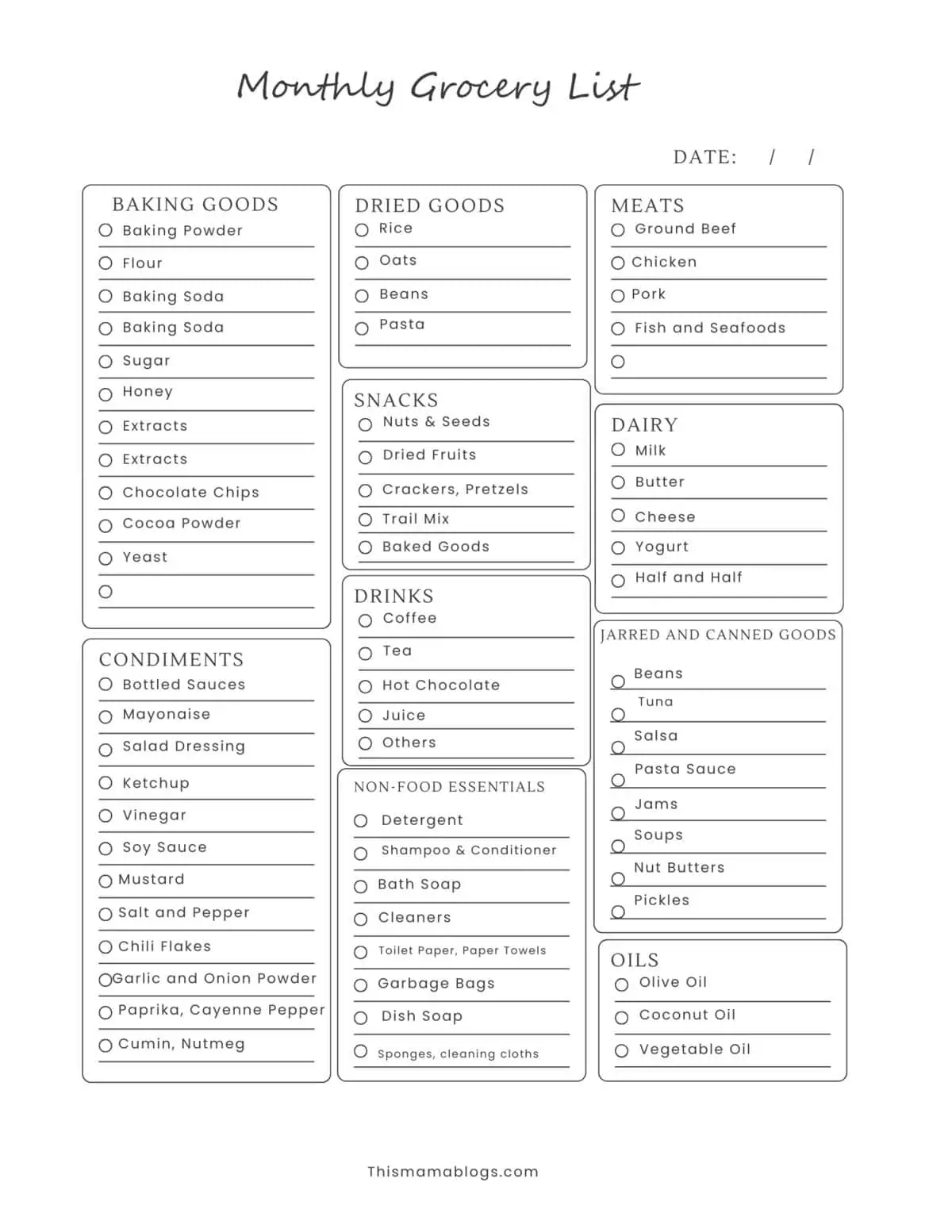
Want an easier way to plan your grocery trips? Grab my FREE Monthly Grocery Shopping Checklist below, or sign up to have it emailed to you for quick and easy access.
1. Dried Food
Dried goods are some of the easiest pantry staples to keep on hand—and they’re lifesavers when you need to throw together a quick, cozy meal. They’re shelf-stable, inexpensive, and incredibly versatile.
Some dried staples I always keep stocked include:
- Rice
- Pasta
- Dried beans
- Quinoa
- Oats
- Beans
When stored properly, these items can last for months and serve as the base for everything from soups and casseroles to breakfast bowls.
2. Baking Goods
Baking staples are a must-have on a monthly grocery list, especially if you enjoy making meals and treats from scratch. Keeping these basics stocked means you can quickly whip up breads, muffins, pancakes, and simple desserts without needing a special trip to the store.
One of the biggest benefits of stocking baking goods is how versatile they are. A few simple ingredients can replace many pre-packaged mixes, saving money and giving you more control over what goes into your food.
Some baking essentials I keep on hand include:
- All-purpose flour
- Sugar (white and brown)
- Baking soda
- Baking powder
- Yeast
- Bread flour
- Vanilla extract ( I no longer buy this. Here's how I make homemade vanilla extract.)
When stored properly in airtight containers, most baking goods have a long shelf life, making them ideal for monthly shopping. Having these items ready also makes it easier to bake on a whim—whether that’s fresh bread for dinner, homemade pancakes for breakfast, or a comforting treat to share with your family.
3. Jarred and Canned Foods
Canned foods often get a bad rap, but they’re still practical, reliable, and surprisingly nutritious—especially when you need quick, low-effort meals.
Studies show that canned fruits and vegetables retain most of their nutrients, and some—like canned tomatoes—can even contain higher levels of beneficial compounds such as lycopene compared to fresh. Their flavors also tend to deepen over time, making them a convenient and delicious pantry staple.
If you’re able to, making your own preserves through home canning is a wonderful alternative. Canning your own fruits, vegetables, and sauces gives you complete control over the ingredients, allows you to avoid unnecessary additives, and can be more budget-friendly over time. It’s also a great way to preserve seasonal produce and reduce food waste. That said, store-bought canned goods are still a helpful and practical option when life gets busy.
Canned staples I usually keep on hand include:
They store well for weeks (or longer), making them dependable kitchen essentials for stress-free meals.
- Tomatoes
- Beans
- Corn
- Tuna
- Pasta sauces
- Nut butters
4. Frozen Foods
Frozen fruits and vegetables are true kitchen lifesavers. They’re picked at peak freshness and frozen right away, helping lock in vitamins, flavor, and nutrients—while lasting much longer than fresh produce.
Keeping frozen foods on hand makes it easy to add a healthy boost to everyday meals, whether you’re blending a smoothie, tossing together a quick stir-fry, or rounding out dinner with a simple side.
I usually keep these stocked in my freezer:
- Vegetables
- Fruits
- Bread
- Tortilla
I also like to store a few frozen meals or homemade leftovers for nights when cooking feels like too much. Freezing helps reduce food waste and gives you the freedom to cook on your own schedule.
5. Meats
Meat is one of the biggest grocery expenses for many families, which is why planning ahead makes such a difference. Buying meat with a monthly grocery list allows you to shop sales, purchase in bulk, and freeze what you won’t use right away—saving money and reducing last-minute trips to the store.
Whenever possible, I divide larger packages into meal-sized portions before freezing. This makes weeknight cooking easier and helps prevent food waste. Frozen meat keeps well for months when stored properly, giving you plenty of flexibility when planning meals.
Some meats I typically include on my monthly grocery list are:
- Ground beef
- Whole chicken or chicken cuts
- Pork (such as shoulder or chops)
- Ground chicken
- Fish or seafood
You can also stretch your budget further by using meat as a supporting ingredient rather than the main focus of a meal. Dishes like soups, casseroles, stir-fries, and rice-based meals allow a small amount of meat to feed the whole family while still feeling hearty and satisfying.
6. Dairy
Dairy items are staples in many households and play a big role in everyday meals, from breakfasts to dinners and baking. While some dairy products need to be purchased more frequently, including them in your monthly grocery planning helps you stay organized and avoid running out of essentials.
For longer-lasting dairy items, I like to buy extra and freeze what I won’t use right away. Many dairy products—like butter, shredded cheese, and even milk—freeze surprisingly well and can be thawed as needed.
Some dairy staples you could include on your list are:
- Milk
- Butter
- Cheese (block or shredded)
- Yogurt ( You can make this with only two ingredients!)
- Cream or half-and-half
Planning your dairy purchases ahead of time also makes meal prep easier, especially for recipes like soups, casseroles, baked goods, and quick breakfasts. Keeping these basics on hand ensures you’re always ready to put together simple, comforting meals without extra trips to the store.
7. Oils
Cooking oils are pantry essentials that often get overlooked until you suddenly run out. Including them in your monthly grocery planning ensures you always have the right oil on hand for cooking, baking, and finishing dishes.
Different oils serve different purposes, so keeping a small variety allows you to cook more efficiently and add better flavor to your meals. Since oils have a long shelf life when stored properly in a cool, dark place, they’re ideal items to stock up on monthly.
Some oils I typically keep on hand include:
- Olive oil (for everyday cooking and dressings)
- Avocado oil (great for higher-heat cooking)
- Coconut oil (useful for baking and certain recipes)
- Vegetable oil or another neutral oil
Having these basics stocked makes everything from sautéing vegetables to baking bread easier and more consistent. With the right oils in your pantry, you’re always prepared to cook from scratch without needing last-minute store runs.
8. Condiments
Condiments are the quiet heroes of the kitchen. They’re what turn simple ingredients into flavorful meals and help keep food from feeling repetitive. While I don’t typically buy these every month, I do make sure the basics are always stocked in my pantry.
Many condiments have a long shelf life, and several—especially mixes and sauces—are easy to make from scratch. I often make my own seasoning blends like taco mix, along with staples such as ketchup and pasta sauce. Making them at home gives me more control over the ingredients and helps reduce our grocery spending over time.
Even when you prefer homemade options, it’s still important to keep a few reliable basics on hand so meals come together easily without extra prep. Some condiments I make sure to have available include:
- Bottled sauces (such as pasta or stir-fry sauce, when needed)
- Mayonnaise
- Ketchup (homemade or store-bought)
- Vinegar (white, apple cider, or balsamic)
- Soy sauce
- Bouillon cubes or powder
- Salt
- Black pepper
Keeping these essentials stocked—even if you don’t purchase them monthly—adds flexibility to your cooking and ensures you’re always ready to season and serve simple, satisfying meals.
9. Snacks
Snacks are an important part of monthly grocery planning, especially for families. Having simple snacks readily available helps prevent constant trips to the store and reduces the temptation to grab expensive convenience foods.
I don’t focus on highly processed snacks. Instead, I keep a mix of homemade options and simple store-bought staples that can be easily portioned or paired with meals. Planning snacks ahead of time also makes busy days smoother, whether it’s for quick breakfasts, after-school bites, or evening treats.
Some snacks I usually keep on hand include:
- Popcorn kernels (easy and inexpensive to make at home)
- Nuts or seeds
- Trail mix (homemade or store-bought)
- Crackers or pretzels
- Cookies or baked goods (often homemade)
- Dried fruit
Stocking snacks monthly helps keep everyone satisfied between meals while staying on budget. With a little planning, snacks can be simple, filling, and comforting—without relying heavily on packaged foods.
10. Drinks
Drinks are another category that’s easy to overlook when planning a monthly grocery list, yet they’re something we reach for every day. Thinking ahead helps avoid last-minute purchases and keeps beverage spending under control.
I try to keep our drink choices simple and focus on items that can be stretched over the month or made at home. While water is our main go-to, having a few additional options on hand makes mornings and mealtimes feel more enjoyable.
Some drinks I typically include on my list are:
- Coffee
- Tea
- Hot chocolate
- Juice or juice concentrate (used occasionally)
Many drinks—like tea, hot chocolate mixes, or even flavored syrups—can also be made at home with basic ingredients, which helps save money and limit added sugars. Planning beverages ahead of time ensures there’s always something available without relying on frequent store runs or expensive convenience drinks.
11. Non-Food Essentials
A monthly grocery list isn’t just about food—it’s also the perfect time to stock up on everyday household essentials. Planning ahead for non-food items helps prevent those frustrating mid-week “we’re out of it” moments and reduces extra trips to the store that can easily throw off your budget.
Buying household items monthly (or even in bulk when possible) often saves money and ensures you always have what you need on hand. These items don’t expire quickly, making them ideal to include in a once-a-month shopping trip.
Some non-food essentials I include on my monthly list are:
- Laundry detergent (Want to make your own? Check out this simple, old-fashioned homemade laundry detergent powder.)
- Dish soap (I make mine using castile soap.)
- All-purpose cleaner (This can be as simple as water and vinegar, or infused with orange or lemon peels.)
- Bathroom cleaner (I make this using just a few pantry staples.)
- Sponges and scrub brushes
- Paper towels or reusable cleaning cloths
- Trash bags
- Bath soap (You can make this too—and it lasts a long time. I love this gentle soap!)
If you prefer a more natural or budget-friendly approach, many cleaning products can also be made at home using simple ingredients like vinegar, baking soda, and castile soap. Whether store-bought or homemade, keeping these essentials stocked helps your household run smoothly and keeps your focus on meals, family, and daily life—without the stress of running out unexpectedly.
Should You Skip Fresh Food?
Not at all! Fresh fruits and vegetables are still worth including on your monthly list. When stored properly, many can stay fresh in the fridge for weeks, and some—like apples—can last even longer.
This allows you to enjoy fresh, nourishing meals during the first week or two of the month before relying more on pantry or freezer items. And if you won’t use everything in time, simply chop and freeze your produce for later. It’s an easy way to stretch your groceries and reduce waste.
Can You Really Save Money With a Monthly Grocery List?
Yes—you absolutely can.
Shopping with a monthly grocery list naturally encourages buying in larger quantities, such as one large bag of rice instead of several smaller ones. This usually works out to a lower cost per serving.
Canned and frozen foods also help stretch your budget, especially for out-of-season fruits, vegetables, and meats. While some convenience items cost more, that’s not always the case—and the time saved can be worth it.
One of the biggest money-savers is simply making fewer trips to the store. Less time browsing aisles means fewer impulse buys sneaking into your cart—and more control over your grocery spending.
Final Thoughts
Using a family grocery list on a budget has truly transformed the way I shop and plan meals. It reduces stress, saves time, and keeps spending in check—all while making mealtime more enjoyable for everyone.
The best part is how flexible it can be. You can swap ingredients, adjust quantities, and tailor it to your family’s tastes while still sticking to your budget.
If you’re ready to simplify shopping and make meal planning less stressful, start with your own list—even a simple one. With a little planning, each meal can feel calmer, easier, and more enjoyable for the whole family.