If your grocery bill has been making your jaw drop lately, believe me—I get it. I’ve stood in that checkout line, sweating not just from the summer heat but from the sticker shock of everyday essentials.
The good news? You can take back control of your budget. My favorite strategy this time of year is budget-friendly meal planning with seasonal summer produce. July is the perfect month to take advantage of nature’s bounty—when fruits and vegetables are at their peak flavor and lowest price. With just a little planning, you can create fresh, nourishing meals your family will love—without breaking the bank.
Why Budget Meal Plan in July?
Table of Contents
July is a great time for budget meal planning. Local markets are teeming with fresh, colorful produce. Not only are these food options much healthier, but they’re also significantly cheaper. With such an abundant supply, you can plan your meals for July without breaking the bank.
Two key things to remember when you’re meal planning (not just in July, but anytime of the year):
- Meals must be budget-friendly.
- They should be nutritious.
An effective budget meal plan helps you save money by focusing on fresh, in-season produce, which is usually sold at a lower price. Plus, you get more nutrients because the produce is harvested at its peak. With these in mind, you can feed your family cheap but healthy meals. The key is to keep things simple and focus on whole foods.
Here’s a July Seasonal Food Guide calendar to find what’s in season in your area.
Meal planning around July’s seasonal picks can be a huge money-saver. Since these produce are locally-grown and abundant, consumers can enjoy them at lower prices compared to off-season and imported produce. Additionally, I find these fruits and vegetables to be versatile enough in most meals, and it’s easy for me to incorporate them into cheap and healthy dishes that my family loves!
So, whether you're trying to serve the best budget meals for July or start saving money on groceries, eating what's in season can make a huge difference!
Meal Planning With Seasonal Produce in July
If you’re already focused on budget-friendly meal prep this July, seasonal produce is your best friend. Not only are in-season fruits and vegetables at peak ripeness—meaning better flavor and texture—they’re often locally grown, making them more affordable and a great way to support local farmers.
According to the Center for Science in the Public Interest (CSPI), some of the most common fresh produce available in July include:
- Zucchini
- Squash
- Corn
- Tomatoes
- Avocados
- Cucumbers
The best part? July is also National Grilling Month, and these versatile veggies are perfect for everything from smoky grilled sides to hearty plant-based mains.
And if you’re a fan of outdoor cooking, you’re in luck—I’ve rounded up a collection of budget-friendly summer grilled dishes that are guaranteed crowd-pleasers for any picnic, potluck, or backyard BBQ.
Want even more inspiration? Check out the USDA Seasonal Produce Guide, which highlights a full list of the freshest and most budget-friendly produce to enjoy all summer long:
- Apples
- Cantaloupes
- Blackberries
- Eggplant
- Lemons
- Bananas
- Okra
- Pears
- Beet
- Peas
- Celery
- Plums
- Raspberries
- Strawberries
- Carrots
- Watermelon
Now that we live in the Philippines, our seasonal crops might differ from what’s available in your area. In July, we get to enjoy a colorful array of produce like avocados, sweet potatoes, beans, squash, and eggplants. Tropical fruits also take center stage this time of year, with lanzones, mangoes, and mangosteens in abundance. These are childhood favorites of mine, and it brings me so much joy to share them now with my family.
One-Week Sample Budget Meal Plan for July
Now, let’s kick things off with a one-week sample budget meal plan you can use this July. Feel free to mix and match with your own family favorites—this plan is meant to spark ideas and show you that saving money doesn’t mean sacrificing taste or nutrition.
The goal? To help you be more intentional with your meals, make the most of seasonal ingredients, and keep your grocery spending in check—all while serving up delicious, satisfying food.
Hot tip: I like to simplify things, so I usually rotate these meals on alternate weeks. It takes the stress out of figuring out what to serve daily. I also make note of family favorites and double the batch, serving one and freezing the other for later.
Here’s a budget-friendly meal plan to help you get through July without overspending:
Day 1
- Breakfast: Berry Overnight Oats
- Lunch: Creamy Cucumber Salad
- Dinner: Zucchini Lasagna
Budget tips:
- Buy berries in bulk and save extras for smoothies or breakfast bowls. Add apples or bananas to sweeten your oats naturally.
- Add onions and tomatoes to stretch your salad. Save leftovers to serve with meat the next day.
- Grate and freeze extra zucchini for soups, muffins, or omelets.
Day 2
- Breakfast: Veggie Egg Scramble
- Lunch: Pork Adobo with Sitaw
- Dinner: Pasta with Fresh Tomatoes
Budget Tips:
- Use leftover veggies in your egg scramble. The more colorful, the healthier!
- Serve pork adobo with rice for a filling meal.
- Double your pasta sauce and save extra for pizzas or future meals.
Day 3
- Breakfast: Banana Oat Pancakes
- Lunch: Summer Corn Salad
- Dinner: Chicken Tinola with Green Papaya
Budget Tips:
- Use overripe bananas, they’re cheaper and sweeter. Freeze extras for smoothies or banana bread.
- Add beans to your salad for a more filling meal.
- Boost the nutritional value of Tinola with moringa or spinach.
Day 4
- Breakfast: Avocado Toast
- Lunch: Vegetable Fried Rice with Egg
- Dinner: Ginataang Gulay (Vegetables in Coconut Milk)
Budget Tips:
- Choose local avocados because they’re cheaper. Add boiled eggs for affordable protein.
Use leftover rice and toss in any veggies you have on hand. - Add in-season veggies like eggplant, sitaw, and malunggay. Tinapa or dilis are great budget-friendly protein options.
Day 5
- Breakfast: Tortang Talong (Eggplant Omelette)
- Lunch: Cheesy Chicken Zucchini Casserole
- Dinner: Cobb Salad
Budget Tips:
- Extend the omelette with tomatoes or other veggies. Serve with leftover rice.
- Use leftover chicken in the casserole. Add pasta for a more filling dish.
- Substitute Cobb Salad protein with leftovers like chicken or bacon. Include seasonal veggies like tomatoes and avocados.
Day 6
- Breakfast: Avocado Breakfast Bowl
- Lunch: Stuffed Bell Peppers
- Dinner: Beef and Cabbage Stir Fry
Budget Tips:
- Replace quinoa with rice for a cheaper option. Stick with local avocados.
- Add rice or lentils to stretch your stuffed peppers. Leftover meats, such as chicken or adobo, work well.
- Use more cabbage and less meat, or consider switching to ground beef to reduce costs.
Day 7
- Breakfast: Garlic Fried Rice With Egg
- Lunch: Rotisserie Chicken Wrap With Strawberries
- Dinner: Baked Eggplant Parmesan
Budget Tips:
- Use day-old rice and add leftover veggies like carrots.
- Opt for leftover or rotisserie chicken. Use the rest in soups, salads, or sandwiches.
Make your own sauce with fresh tomatoes, herbs, and spices. Freeze extras for pasta or pizza.
Plan Your Week Like a Pro!
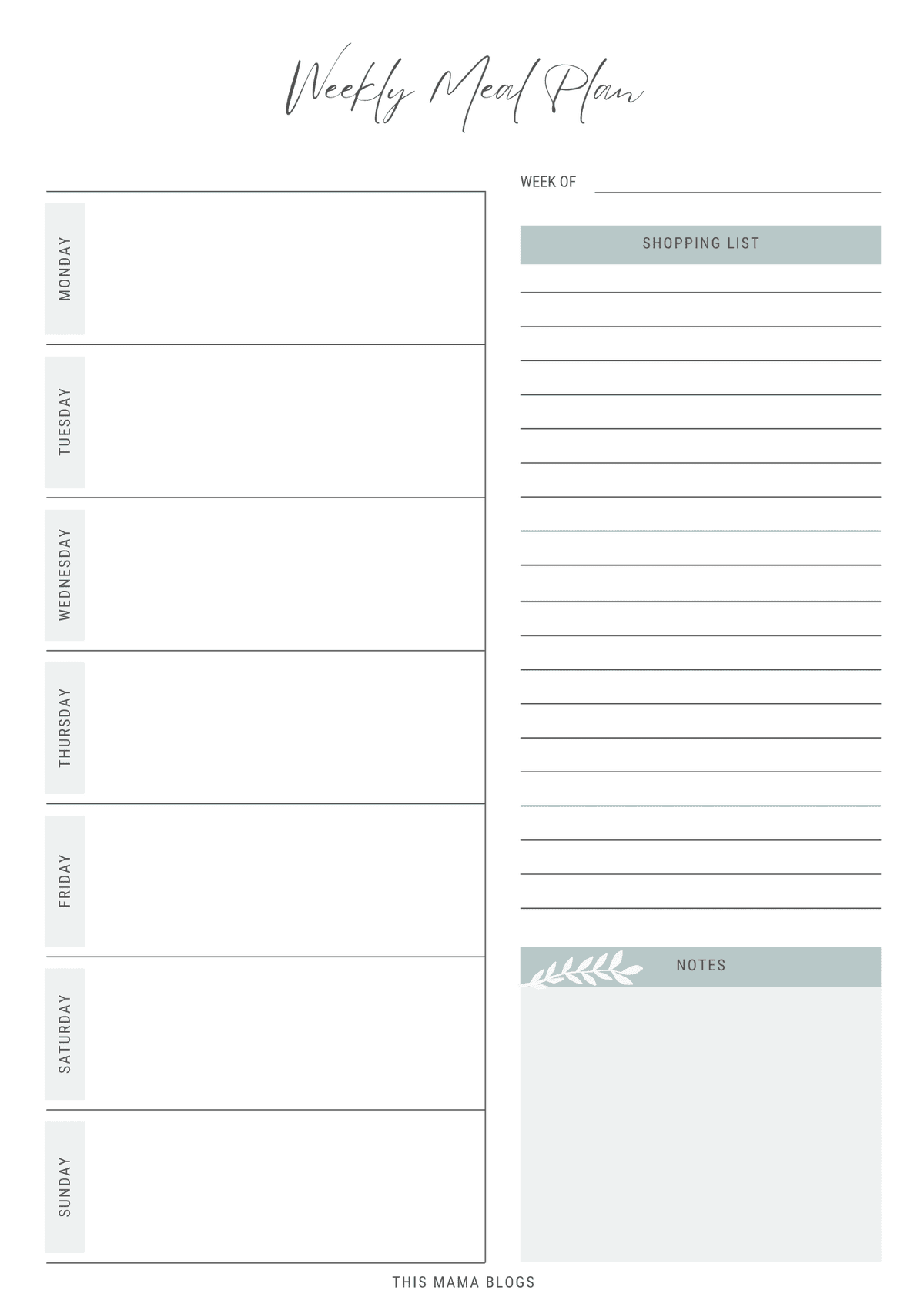
Stay organized and stress-free with this free printable weekly meal planner. Just click on the image to download and print your copy instantly.
Want to keep it handy and never lose it? Enter your email below, and we’ll send it straight to your inbox!
More Smart Budget Meal Planning Tips for July
Summer meal planning doesn’t have to be so complicated. Focus on in-season, whole foods to cut costs, and meal-prep everything on the weekends to free up time during the busier days. Here are more budget meal planning tips for July to set you up for success.
1. List down everything you need
Never leave home without a grocery list, and stick to it! Before you head to the store, take a moment to inventory your fridge and pantry to avoid buying duplicate items.
2. Build Your Meals Around Sale Items
Check online to see what’s on sale, and build your menu around them. For instance, if bell peppers are on sale, cook a double batch of stuffed bell peppers so you can enjoy them for two lunches or dinners.
3. Be creative with leftovers
You don’t always need “new” ingredients. Buy a mix of veggies and inexpensive proteins like chicken breast or lentils. Leftovers can go into soups, omelets, stews, or salads.
4. Buy in Bulk Only When It Makes Sense
Buying certain items in bulk, such as grains and oats, is often more cost-effective. The same can be said for in-season produce. But make sure you have enough storage for them, and you know how to freeze the produce properly so that they don’t go to waste.
5. Plan Meatless Days
Meat is usually expensive, but we’ve figured that it doesn’t hurt to go meatless at least once or twice a week. During these days, we use tofu, eggs, and lentils, and they’re just as delicious and filling. If you want to learn how to save money on food in July, this is one of the best ways to go!
Try the $5 Meal Plan
Want to make meal planning even easier? Try the $5 Meal Plan! It’s a super affordable subscription service that sends you a pre-made weekly meal plan and shopping list for just $5 a month. The meals are budget-friendly, family-approved, and take the stress out of figuring out what’s for dinner every night. If you’re looking to save both time and money while sticking to your grocery budget, this is definitely worth checking out!
Creating a meal plan for July—or any month—is one of the most powerful ways to cut down on food expenses. Our meals may be simple, but I always aim to make them delicious, nutritious, and budget-friendly.
And just because it’s a frugal meal plan doesn’t mean it has to be dull. These meals are vibrant, nourishing, and full of flavor. With the right approach, budget meal planning can feel less like a chore and more like a creative challenge. I hope these tips help you step into July feeling more confident and inspired in the kitchen.
What are your go-to tips for budget meal planning? And which recipes are staples in your home? Let’s chat in the comments—I’d love to hear your ideas!